

Who Gets to Use the Most Powerful AI Models? The Governance Crisis We’re Ignoring
3 Jun 2026
Anthropic’s Mythos model is gated behind million-dollar contracts, exposing a shift toward AI elitism. Discover why open-source AI is our best defense against c
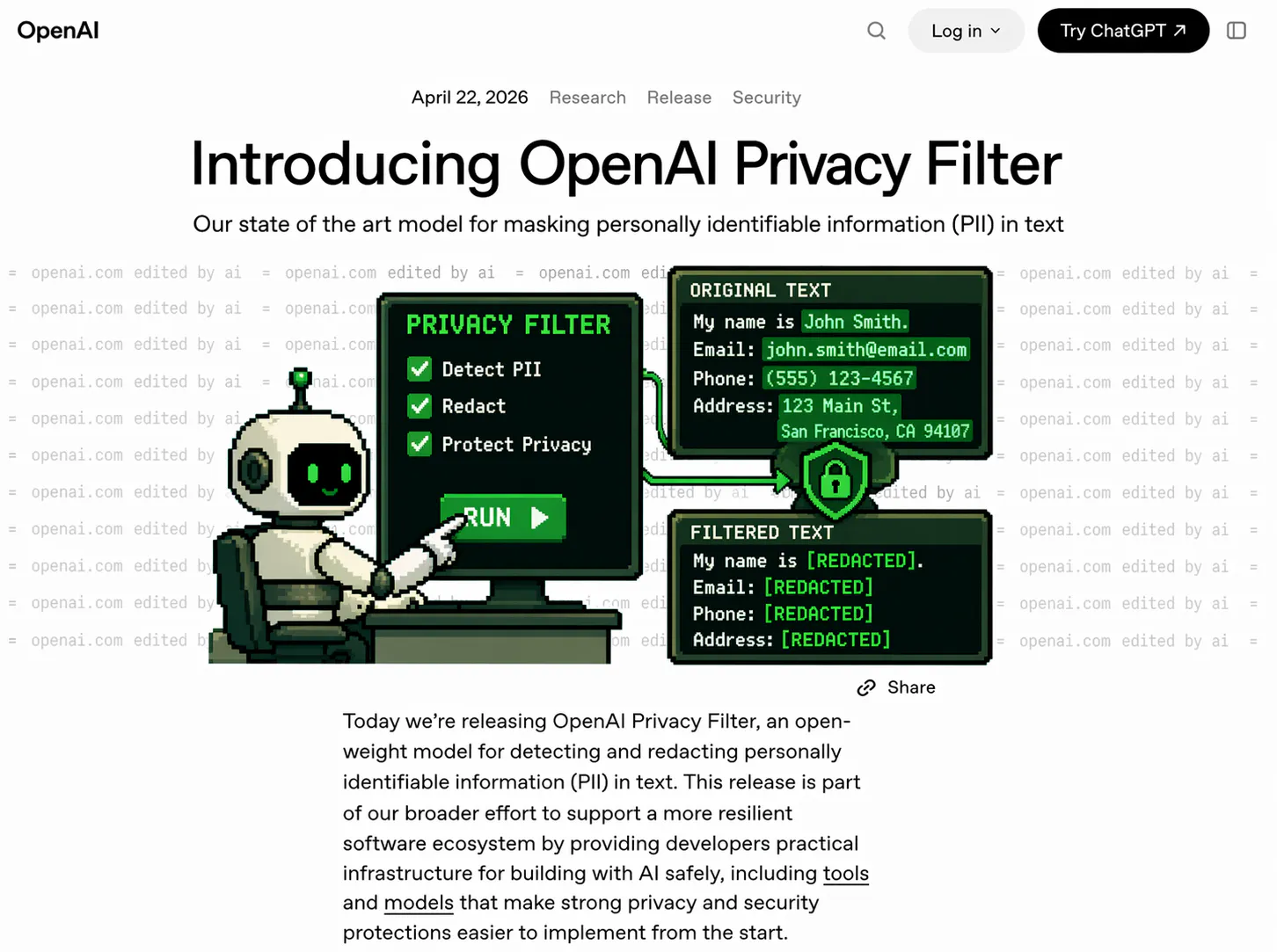
OpenAI Open-Sources Privacy Filter, a Tiny Model That Scrubs PII Without an API Call
22 Apr 2026
OpenAI open-sourced Privacy Filter, a 50M-active-parameter model that detects and masks PII locally in one pass. Here's what's actually new, and what's hype.

What Sequent Calculus Teaches Us About Computation
9 Jul 2025
A clear breakdown of how λμμ˜-calculus relates to sequent calculus, typing rules, and operational semantics like label/goto.

What Codata, Control Flow, and Logic Teach Us About Programming
9 Jul 2025
Learn how programming concepts like logic, control flow, and evaluation strategy shape the languages we use.
Sequent Calculus vs CPS: A Compiler’s Perspective on Consumers and Evaluation Strategies
9 Jul 2025
Explore how sequent calculus handles consumers, evaluation orders, and eta laws better than CPS, with insights on linear logic and functional compilers.

Why Compiler Writers Care About Case-of-Case
9 Jul 2025
Explore the duality between let-bindings and control operators, and how λμμ˜ calculus enables powerful compiler optimizations like case-of-case.
What Functional Programmers Can Learn from Sequent Calculus
8 Jul 2025
Explore 5 powerful insights into the 𝜆𝜇𝜇˜-calculus, from first-class evaluation contexts to the elegant duality between data and codata types.
How Typing Rules and Type Soundness Work in Core and Fun Programming Languages
8 Jul 2025
Learn how typing rules and type soundness theorems ensure safe program evaluation in Core and Fun, including codata handling and recursive definitions.
Why Type Soundness Matters in Functional Programming Languages
8 Jul 2025
A breakdown of typing rules in Fun and Core languages, with insights into control flow, type soundness, and data vs codata handling.